What makes an anti-raid sky settlement in Rust so hard to break into?
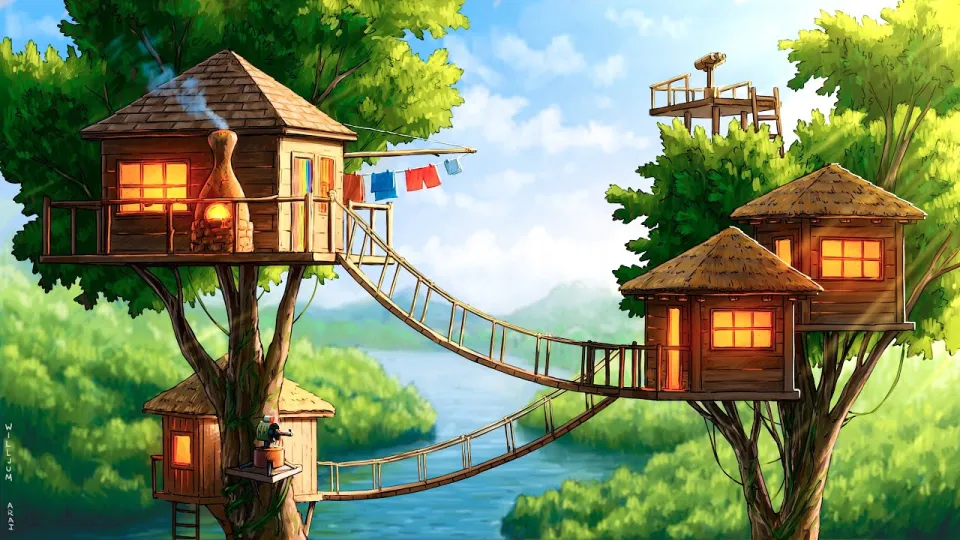
Video: I Built an anti raid sky settlement in Rust...
You can order the same kind of articles for your own video to boost it on YouTube and Google. Just message the Telegram bot @sat_sit_bot. The bot writes and publishes the articles itself (with your YouTube video embedded) on popular topical websites (no ads). Your first 50 articles are free.
· based on the channel Willjum
A Rust anti-raid sky settlement is a base built high above the ground — usually on a tower, cliff or floating platform — so that anyone who wants your loot has to spend more explosives, more time and more exposure getting to it than the raid could ever return. It does not make a base unraidable; it makes raiding it a bad deal. The concept is the centrepiece of Willjum's solo build video, and the logic behind it is worth understanding whether you play solo, duo or in a small group.
If you want to see more of these long-form survival runs, the creator's Patreon page is where supporters get early access and behind-the-scenes material on each weekly build.
Why does height work as raid protection in Rust?
Height works because Raid in Rust is a cost calculation, not a damage calculation. Every wall you add between the attacker and the loot raises the explosive budget, and vertical distance adds a second cost on top: the raider has to reach the structure at all.
A grounded base can be hit from four sides, from the roof, or through a soft side. A sky settlement narrows that to a handful of approaches:
- Building up. The raider constructs a raid tower from the ground, which takes materials, time and usually a visible silhouette that you can spot from inside.
- Flying in. Minicopters and scrap helicopters let a group drop straight onto the roof, but a helicopter is loud, fragile and expensive to lose.
- Climbing. Ladders and external stairs are the cheapest route and the one most sky bases accidentally leave open.
Each of those routes forces the attacker to commit before they know what is inside. That uncertainty is the real defence: a raider who cannot see your loot room cannot tell whether the raid is worth 20 rockets or 200.
How do you actually build a sky settlement step by step?
The build order matters more than the final screenshot, because stability and upkeep punish improvisation. A workable sequence for a solo player looks like this:
- Pick the footprint on the ground. Choose a flat or gently sloped spot with clear sightlines, ideally near a monument for loot runs but not on the main road where every passing player sees you.
- Raise the support tower. Build a narrow column of foundations and walls, keeping the base small so the tower itself is cheap to maintain and hard to ladder without being noticed.
- Cap the platform. Once you reach your target height, expand into a floor plate wide enough for a tool cupboard, a small loot room, a sleeping bag and a furnace.
- Seal the access. Replace stairs with a jump-up or a drop-down entrance, and make sure the only way in is through a door you control.
- Layer the loot. Put a decoy room near the entrance and the real stash deeper inside, behind at least two walls and one door.
- Check the tool cupboard coverage. The cupboard must cover the entire structure, or a raider can simply build a tower next to your walls and bypass them.
Keep the tower under four or five floors at first. The higher you go, the more the structure costs in upkeep and the more of it you lose if a single support section comes down.
What does a sky base cost in upkeep and materials?
Upkeep is the part of the plan that kills most sky bases, because a tall structure multiplies its own surface area. Rust charges upkeep based on the number of building blocks and their tier, so every extra floor and every upgrade from wood to stone to metal adds a recurring bill.
Practical rules that keep the bill manageable:
- Stay compact. A small two-by-two platform with two floors costs a fraction of a sprawling sky fortress and protects the same loot.
- Upgrade selectively. Metal or high-quality metal on the loot room and the tower's lower section; wood or stone on the outer shell that exists to absorb the first rockets.
- Stock the cupboard before you log off. Running out of upkeep means the structure decays, and a decaying sky base is a free raid for anyone who notices.
- Keep a second stash. A small hidden ground base with spare tools, weapons and materials means a failed sky base does not end your wipe.
The trade-off is real: a sky settlement is a mid-wipe project, not a day-one plan. Build it once you have a workbench, a steady scrap income and enough spare material to feed the cupboard every day.
Where does the anti-raid sky settlement design fail?
A sky settlement fails in four predictable places, and each one has a fix.
- The climb path. Ladders placed against the tower are the single most common way in. Use a jump-up entrance with no ledge to grab, and check the exterior from the ground yourself.
- The roof. A flat platform is a landing pad for helicopters. Add a low wall or overhang so a player cannot simply step out of a minicopter onto your loot room.
- Stability. Tall towers with wide platforms hit the structural limit, and a raider who destroys one support section can drop half the base. Keep the platform narrower than the tower is tall.
- Fall damage and daily life. Living at height means every furnace run, every scrap trip and every death costs time. Many players keep the sky base as storage and a small ground shack as the working base.
There is also a social risk: a base that looks unusual attracts attention. On a busy server, a visible tower above the treeline is a landmark, and landmarks get visited.
What do viewers and non-players usually ask about this kind of build?
The most common reaction to a sky base video is disbelief that it survives at all, followed by questions about time and cost. Long-time viewers of the channel often point out that they have never launched Rust and still follow every weekly episode, which says a lot about how much the format depends on storytelling rather than patch notes.
The recurring doubts are practical ones: how long the build takes, whether it holds up against a group rather than a solo raider, and whether the upkeep is worth it compared with a normal bunker base. The honest answers are that a sky settlement is a project for a player with spare resources, that a coordinated group will eventually get in, and that its value is in the time it buys you and the raids it discourages rather than in absolute safety.
For players who want the mechanics without the grind, the creator also streams the same survival format live at https://www.twitch.tv/willjum, where the build decisions happen in real time.
Useful links
- Patreon support and bonus content
- Willjum on Twitch
- Willjum on Twitter
- Creative Commons Attribution 4.0 licence
The verdict on sky settlements in Rust
An anti-raid sky settlement is a cost multiplier, not a shield: it forces raiders to spend more explosives, more time and more exposure than a ground base ever would, and that is usually enough to send them looking for an easier target. The design rewards players who plan the tower, keep the footprint small and feed the tool cupboard every day. It punishes anyone who builds tall, wide and broke, because upkeep and stability do not forgive. Willjum's solo run on his survival island servers is a good reference point for how the concept plays out over a full wipe, and the Patreon page is the place to support more of these weekly builds.
Key takeaways
- Sky bases sit high above the terrain, so raiders must climb, fly or build a tower before they can even touch the walls.
- Height is not protection by itself: rockets, C4 and explosive ammo still work, but the attacker pays far more per raid than the loot is worth.
- Upkeep scales with the base size and tier, so a tall multi-floor build needs a steady supply of wood, stone, metal or high-quality metal.
- The main risks are stability limits, fall damage, limited room for a large furnace and workbench setup, and the exposed climb path.
- Willjum built the concept on his survival island servers and covered the full run in a weekly solo video.
Source: I Built an anti raid sky settlement in Rust... · Markdown version
Questions & answers
Is a sky base in Rust actually unraidable?
No. Rockets, C4 and explosive ammo still destroy the walls, and a coordinated group can build a raid tower or fly in with a helicopter. The advantage is economic: the attacker spends far more than the loot is worth, so most raiders give up before they reach the loot room.
How much upkeep does a sky settlement need?
It depends on the number of building blocks and their tier, so a compact two-floor platform is cheap while a wide multi-floor tower is expensive. Keep the structure small, upgrade only the loot room and the lower tower to metal, and always stock the tool cupboard before logging off.
Can a solo player build one without a group?
Yes, but it is a mid-wipe project rather than a day-one base. You need a workbench, steady scrap income and spare materials for daily upkeep, plus a small hidden ground base as a fallback if the sky base is lost.
What is the biggest weakness of a sky base?
The climb path. Ladders, stairs or any ledge an attacker can grab turn the height advantage into a free entrance, so use a jump-up or drop-down entry and check the exterior from the ground yourself.